
The law requires websites to obtain the user’s prior consent for the use of cookies and other similar technologies that aren’t necessary for the site to function. Does the consent requirement threaten your data? How many users will refuse to be tracked?
Opt-in cookie consent
The European guidelines issued in 2020, following the 2019 CJEU ruling, oblige websites to collect user consent for cookies. In place of the old cookie bar, which served no actual function, websites should install a consent management platform that lets the user consent or refuse, and change their preferences.
The earlier approach consisted of informing the user that cookies were used and that they could be blocked in the browser settings — a relatively complicated task, which meant few users ever decided to block or delete cookies.
Many site owners fear that giving users a simple way to refuse cookies will hurt the quality of their statistics and the effectiveness of ads optimized on that data. Are they right?
What percentage of users refuse tracking?
The fears seem overblown. In January 2022, the average refusal rate on the sites of clients for whom we implemented a consent management platform was 2.3%.
A typical e-commerce platform should expect between 1% and 5% refusals. The refusal rate on adequate.digital — the site you’re reading right now — is slightly higher, ranging from 6% to 9%. See the data from the Cookiebot platform we use:
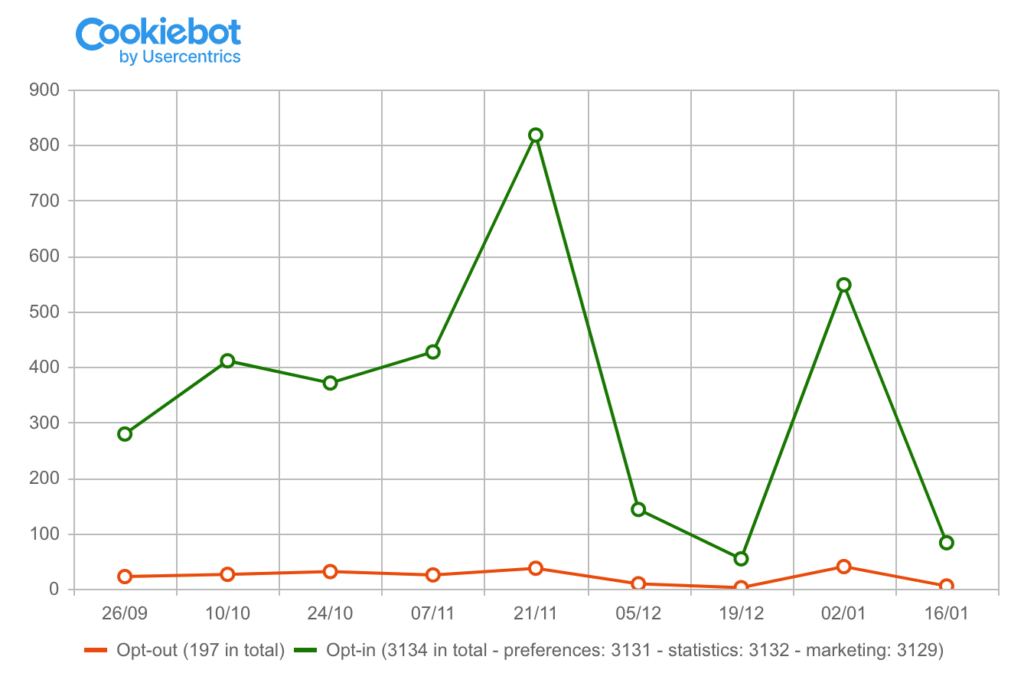
This is no surprise. People interested in online marketing are more aware of the importance of privacy protection and more often choose to refuse.
Does consenting to cookies mean you’re a clueless user? Nothing could be further from the truth. Fears of cookies often stem from misunderstandings and the myths surrounding them. There is really nothing wrong with them. But since they involve data processing, you have the right to choose — and every site that cares about its reputation and has nothing to hide should respect it.
Why do so few users refuse?
We haven’t run a study on this yet, but a few hypotheses can be put forward:
- The main reason seems to be the widespread belief that consent is required to access the site, its content, products and services. Users click “accept” because their experience tells them that otherwise they’ll face a “select your consents” message and pointless extra clicking.
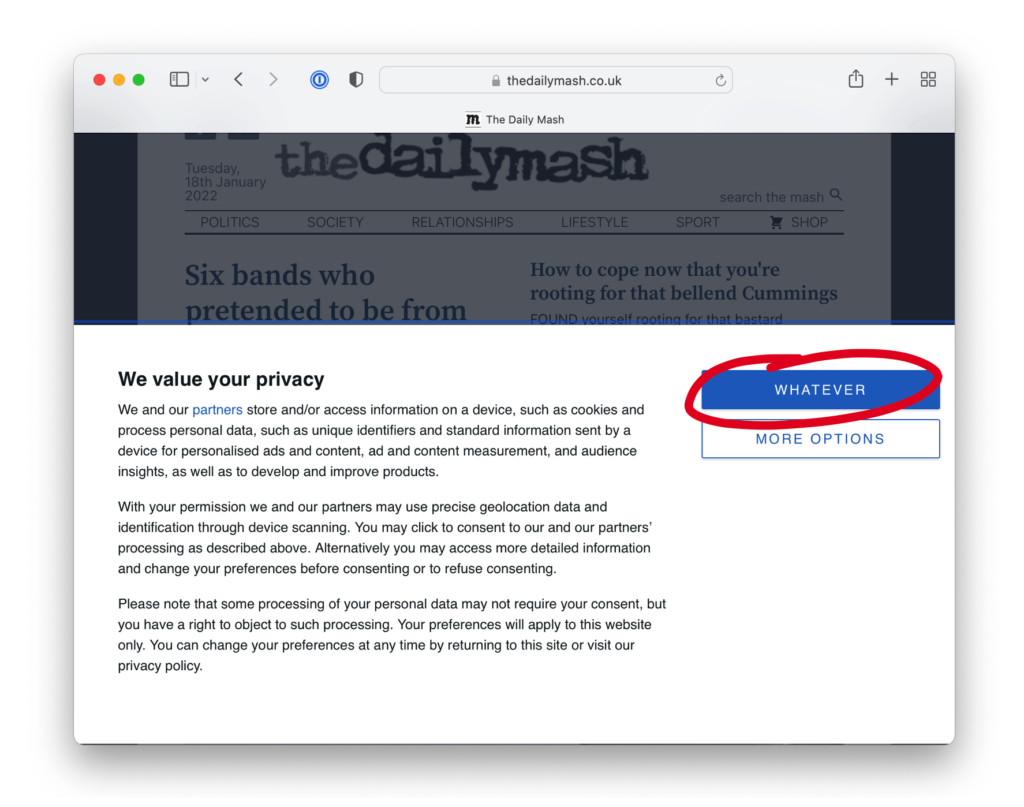
- Many users simply don’t care. The state of mind of the average user looking at a cookie banner is well captured by the button on thedailymash.co.uk (see the screenshot below).
A refuse button on the first screen?
European regulators and participants in the debate point out that a “refuse” option should also be available on the first screen (like Deutsche Bank below), not just a “go to settings” option (like BNP Paribas in the example below).
The basis for this expectation is the GDPR provision stating that withdrawing consent should be as easy as giving it. This provision seems to have been aimed mainly at solutions where you consent with a single button, while withdrawing consent requires, say, sending a registered letter — but it may well become a requirement in the future.
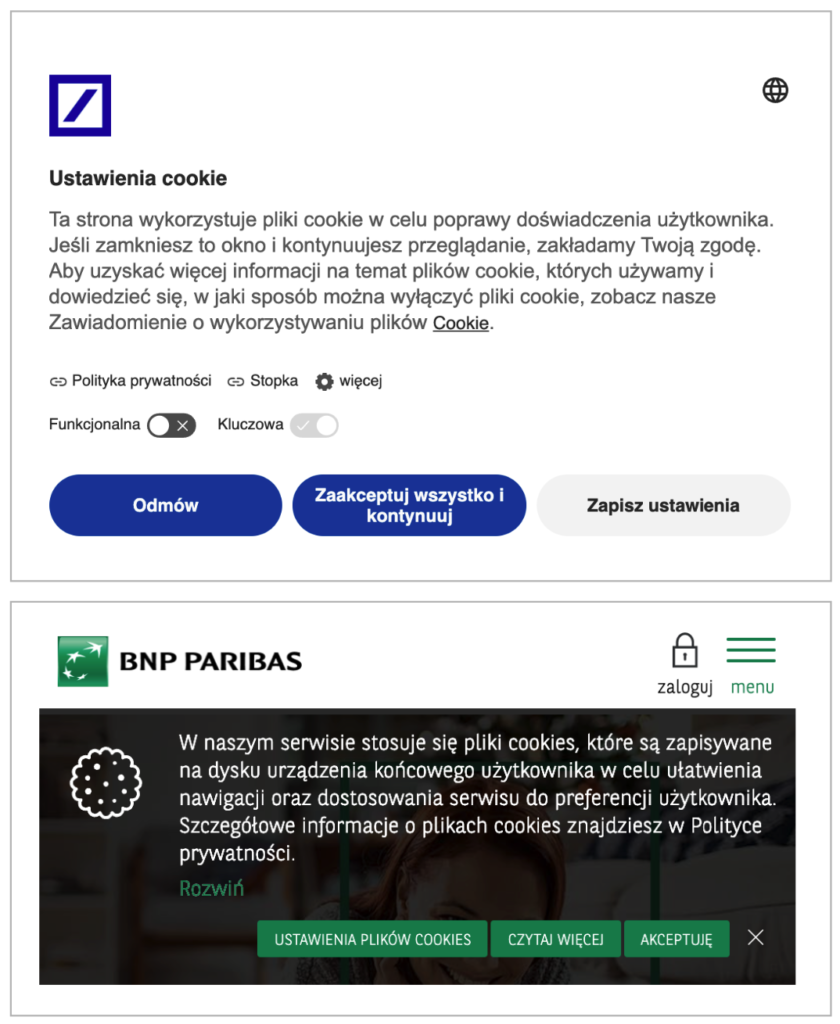
Our research shows that indeed, a “refuse” button available right on the first screen increases refusals by a few percentage points.
Most consent management platforms let you add such a button in literally a few minutes, should the system need to be modified.
What about the lost data?
Lack of consent doesn’t mean we lose information about those users. A properly implemented consent management platform doesn’t block tracking scripts on refusal — it runs them with the appropriate Consent mode setting, which allows the collection of information not tied to identifying the user.
Thanks to this, systems like Google Ads and Analytics know how many people refused consent, and based on the information collected they can estimate the likely number of conversions from those users.
Given the moderate refusal rates and the modeling of missing conversions by analytics systems, collecting consents properly shouldn’t have a significant impact on the quality of your data.
Need support implementing a consent management platform? Get in touch with us.
